


Find out how Wimpey Laboratories’ testing and certification expertise guarantees water testing solutions of the highest quality.
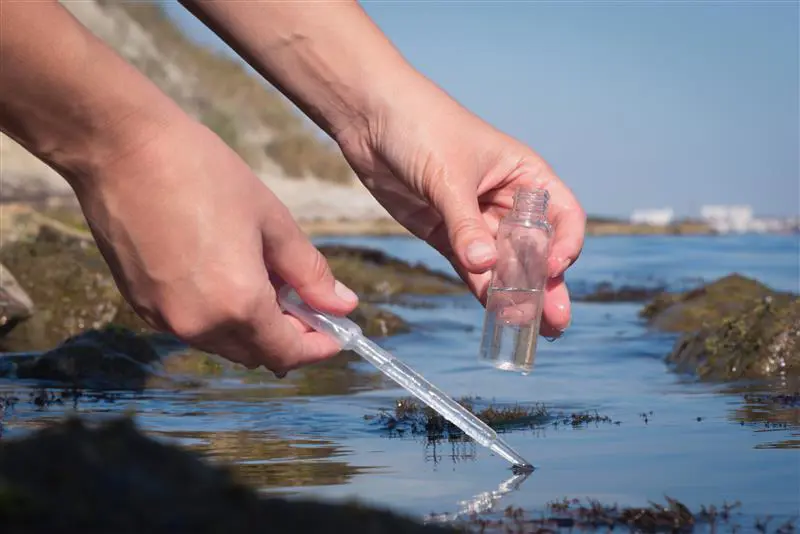
Water testing involves analysing water samples to ascertain their microbiological, chemical, and physical characteristics. This method helps identify potential pollutants or impurities in the water. During testing, various factors are evaluated, such as pH, turbidity, chlorine levels, and the presence of bacteria or harmful compounds. Regular water testing is essential to ensure safety and regulatory compliance.
Key Regulatory Standards
Wimpey Laboratories, part of the Cotecna Group, adheres to several vital regulatory standards, including GSO 149, GSO 1025, and GSO 987:2021, among others. These standards govern water testing, covering un-bottled drinking water, bottled drinking water, and natural mineral water compliance. The testing of wastewater can be performed as per the regulatory requirement of each country.
The Water Testing Process
The process of water testing for both drinking water and wastewater follows a systematic approach:
- Sampling
- LIMS Registration
- Testing
- Reviewing
- Approval
We employ various testing methods such as:
- Quantitative Testing (for heavy metals, hardness, alkalinity)
- Chromatography (for VOCs, pesticides, PFAS,Bromate)
- Physical Parameter Measurements (for pH, conductivity, appearance)
Common Contaminants Detected in Water Testing
Water testing typically identifies four categories of contaminants:
Physical Pollutants: Physical contaminants primarily refer to pollution caused by particles such as rocks and sediments in water. These impurities can cause visible changes in the liquid's color, appearance, odor, and taste.
Chemical Pollutants: Natural chemical pollutants include toxins produced by bacteria, nitrogen compounds, and arsenic. These pollutants often result from water-based organisms, erosion, and runoff. They may enter groundwater in trace amounts, but prolonged exposure and consumption can have harmful effects on health.
Biological Pollutants: Biological pollutants include microorganisms such as viruses, bacteria, protozoa, and parasites. Most of these are microscopic, but some can aggregate into colonies. Waterborne diseases like cholera and typhoid fever are caused by these microbes. Symptoms of microbial infections often include diarrhea, nausea, and vomiting.
Radiological Pollutants: Radiological contaminants are the last category of water pollutants. While almost any ionized chemical can be radioactive, certain elements like caesium are more common. Some naturally occurring radioactive elements, known as radionuclides, can erode from rocks and enter groundwater through rivers over time. Radiological pollutants can be both naturally occurring and man-made. Sources of man-made radiological contamination include improper disposal of radioactive waste, accidents in nuclear reactors, and nuclear fallout.
Ensuring Comprehensive Water Testing Services
Wimpey ensures that your product meets the specified quantity, specifications, measurements, materials, and visual appearance as per your order. We also verify that packaging, labelling, instructions, and markings comply with mandatory standards. Additionally, we ensure that your supplier adheres to contractual requirements. Through our expert teams and advanced facilities, we provide comprehensive Testing, Inspection, and Consultancy services globally.
Advanced Analytical Techniques Utilized by Wimpey Laboratories
Chemical analysis is a fundamental aspect of water quality assessment. It involves testing various chemical parameters to identify contaminants and determine their concentrations in water. Physical analysis, on the other hand, assesses properties such as temperature, color, turbidity, and conductivity.
In addition to these testing methods, instrumental techniques are employed in laboratory settings to analyze water samples:
- Ion Chromatography: Measures trace levels of anions and oxyhalides
- Inductively Coupled Plasma Mass Spectrometry (ICP-MS): Detect trace levels of various elements
- Gas Chromatography (GC): Quantifies volatile compounds
- Total Organic Carbon (TOC): Determines the amount of organic carbon in water, useful for detecting leaks or organic fouling of resins
- Liquid Chromatography-Mass Spectrometry/Mass Spectrometry (LC-MS/MS): Quantifies pesticides, PFAS and other contaminants in water
Legislative References and Standards for Wimpey's Services
Wimpey aligns its testing procedures with several international guidelines, including:
- The American Public Health Association (APHA)
- United States Environmental Protection Agency (USEPA)
- American Society for Testing and Materials (ASTM)
In addition, Wimpey follows several guidelines:
- GSO 149:2021 -Unbottled Drinking Water
- GSO 1025:2016 - Bottled Drinking Water
- GSO 987:2021 - Natural Mineral Water/Spring Water
- World Health Organization (WHO) Guidelines
- EU Regulations S.I. No. 282 of 2016 - Natural Mineral Water/Spring Water
- Technical Guideline No. 8 - Disposal of Hazardous Waste (WTS-TG No. 8)
- Guidelines for private and public Swimming Pool Safety - Health & Safety Department, Ref: DM-HSD-GU80-PRSPS2& DM-HSD-GU81-PSPS2
- Guidelines for Legionella Control in water system - Public Health & Safety Department, Ref: DM-HSD-GU44-LCWS2
Case Studies:
- Emirates Quality Mark (EQM) for Bottled Water Testing in the UAE
EQM operates as both a mandatory and voluntary certification in the United Arab Emirates. To supply bottled drinking water, obtaining EQM certification is necessary. EQM certification is awarded to products that meet UAE national standards, regional and international standards, and are produced by organizations adhering to a high-standard quality management system. With EQM certification, you can be assured of the product's high quality and adherence to standards.
To obtain EQM certification, both the product and the quality system used by the manufacturer must undergo a series of tests and inspections. A Certificate of Conformity is issued after reviewing and evaluating the application, and it is valid for one year. The certification can be renewed at least one month before its expiration. This certification is crucial for businesses as it establishes international standard guidelines for their products and reassures consumers of the product's adherence to international quality standards.
Manufacturers and traders of bottled drinking water must register their products in the UAE and obtain EQM certification from ESMA to legally distribute their products in the country.
Consequences for Bottled Water Products Without EQM Certification in the UAE Market
Bottled water products that do not bear the EQM certification will be deemed non-compliant and may be removed from the market or rejected during shipment (for imports). Additionally, there may be substantial penalties for non-compliance.
Determining Regulatory Compliance with Cotecna
These regulatory requirements may include technical specifications, safety standards, performance requirements, as well as labeling and packaging requirements.
Different conformity assessment techniques include testing, inspection, validation, verification, certification, and accreditation. These activities can lead to various statements of conformity, such as a supplier's declaration of conformity or a certificate.
Cotecna Dubai has been notified by MoIAT for the certification of drinking water in the UAE. Together with Wimpey Laboratories, Cotecna can offer comprehensive services for water conformity assessment in the UAE.
- Determining Persistent Organic Pollutants (POPs) and their Impact
Persistent Organic Pollutants (POPs) are a group of toxic man-made chemicals produced either intentionally or as byproducts of industrial activities. POPs include pollutants such as pesticides (e.g., DDT) and industrial chemicals (e.g., PCBs). These substances are persistent in the environment, bioaccumulate in living organisms, and can have harmful effects on human health and ecosystems.
Examples of POPs include:
- Aldrin
- Chlordane
- Dieldrin
- Dioxins
- Endrin
- Furans
- Heptachlor
- Hexachlorobenzene (HCB)
- Mirex
- Toxaphene
- Polychlorinated Biphenyls (PCBs)
- Per and polyfluoroalkyl substances (PFAS)
LC-MS/MS (Liquid Chromatography-Mass Spectrometry/Mass Spectrometry) and GC-MS (Gas Chromatography-Mass Spectrometry) are analytical techniques used to quantify POPs in water.
Addressing Other Organic Pollutants
Polycyclic aromatic hydrocarbons (PAHs) and phthalates are organic pollutants that are ubiquitously present in water. They are primarily generated from activities such as transportation, home heating, industrial emissions, and biomass burning.
Exposure to high levels of pollutant mixtures containing PAHs, particularly in certain occupations, is known to result in symptoms including eye irritation, nausea, vomiting, and diarrhoea.
Additionally, PAH mixtures can cause skin irritation and inflammation. Examples of common PAHs and phthalates found in samples include fluoranthene, naphthalene, pyrene, phenanthrene, di-2-ethylhexyl phthalate, and di-n-butyl phthalate.
Ensuring Accuracy and Reliability
Wimpey Laboratories is an ISO/IEC 17025 accredited laboratory, recognized for both testing and sampling.
ISO/IEC 17025 is a widely accepted international standard that specifies general requirements for the competence of testing and calibration laboratories.
Accreditation involves rigorous assessments of methodologies, equipment, staff proficiency, and quality management systems. This commitment to excellence ensures reliable and accurate test results.
Employing proficiency testing and adhering to ISO/IEC 17025 standards through accreditation are among the most effective strategies for maintaining consistently high-quality analytical results.
Requesting for Water Testing Services
Businesses and individuals can request water testing services from Wimpey through our website or by contacting your local Cotecna offices directly.
For any concerns or request a quote, please contact us.
About Cotecna
For over 50 years, we have been supporting agriculture, food and pharma, minerals and metals, and consumer products supply chains all over the world. We provide testing, inspection, and certification services to help our clients navigate evolving regulations, ensure product compliance, and support their sustainability journey.